The Biggest Misconception About Church Tech
A lot of churches assume that effective ministry requires high-end production. It doesn’t.
Folks rarely walk away from a church service saying, “The cable management changed my life.” What they remember is whether they felt welcomed, understood, and connected.
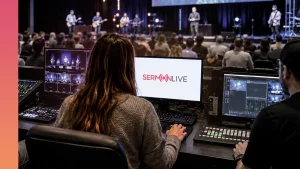
For small churches, especially, tech works best when it becomes almost invisible and reliable enough that it removes distractions instead of creating them. That means focusing less on impressing folks and more on helping people engage with the service.
What Small Churches Actually Need
Trusted Audio
Reliable audio is priority number one. If people can’t hear clearly, almost nothing else matters.
Crackling microphones, uneven volume levels, or muffled speech are distracting and don’t allow folks to fully hear or connect to the message. Good audio creates clarity. Clarity helps people stay engaged.
For small churches, a strong audio setup typically matters more than expensive cameras or elaborate stage lighting.
That includes:
- Clear microphones
- Balanced speakers
- Simple sound mixing
- Reducing echo or feedback
- Consistent volume throughout the service
Simple Systems Volunteers Can Actually Use
One of the biggest mistakes churches make is building a tech setup that only one person understands. If that one person can’t attend a service, that service will be stressful for everyone.
If your entire service depends on a single volunteer knowing how to restart software, troubleshoot routing, or fix sync delays, your church tech is too complicated.
Small churches benefit most from systems that are:
- Easy to train on
- Easy to troubleshoot
- Reliable week after week
- Realistic for volunteer teams
Technology That Helps People Feel Included
This is where many churches unintentionally overlook one of the most impactful areas of ministry. Not every person in the room experiences the service the same way.
Some visitors may speak one language more comfortably than another. This is where accessibility matters more than flashy production. Technology that helps people understand and participate often creates a bigger ministry impact than technology designed just for appearance purposes.
Churches serving multilingual communities especially benefit from tools and solutions that make communication easier and more welcoming during services.
Presentation Software That Stays Organized
Small churches do not necessarily need cinematic visuals. What they do need is organization. A clean and dependable presentation setup goes a long way in helping services flow smoothly and reducing distractions.
That means:
- Easy-to-read lyrics and scriptures
- Organized sermon slides
- Consistent formatting
- Simple transitions
- Minimal technical confusion
What Small Churches Usually Don’t Need
Overly Complicated Production Systems
Many churches buy equipment based on what larger churches use rather than what they realistically need.
Just because a bigger church has advanced switching systems, multiple camera operators, and dynamic stage lighting does not mean every church needs to.
Complex systems often create:
- More training needs
- More technical failures
- Higher maintenance costs
- More volunteer stress
Small churches thrive best when their systems match their actual ministry needs.
Expensive Gear Without a Clear Purpose
Churches sometimes purchase equipment because it feels like progress. However, technology without a ministry purpose often becomes unused, outdated, or frustrating.
Before buying new tech, churches should ask:
- Will this help folks engage more?
- Will this solve a recurring problem?
- Can our team realistically maintain this?
- Does this support ministry goals?
- Is this sustainable financially?
If the answer is no for a majority of these questions, the purchase may not be necessary.
Technology That Replaces Human Connection
Technology should never become a replacement for hospitality, conversation, leadership, or pastoral care.
The churches people remember most are usually not the ones with the most equipment, but the ones where people felt seen, welcomed, and included. The right technology supports those experiences instead of distracting from them.
In Conclusion
When evaluating church technology, it helps to think in terms of impact rather than appearance. For many small churches, the smartest investments are often the least flashy, such as high-quality audio, volunteer-friendly systems, and accessibility tools.
For churches with multilingual congregations, communication technology becomes crucial.
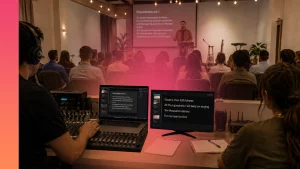
Sermon Live focuses specifically on live, in-person church translation services designed to help people fully engage during services without adding unnecessary or complex technology. This way, the focus stays on making sermons and worship experiences easier to understand. For many small churches, that kind of practical accessibility can have a more significant impact than costly production equipment ever could.