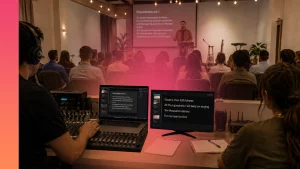
Growth Changes Everything, Especially Communication
Communication tends to happen naturally in smaller churches. People talk before and after service, updates spread quickly, and everyone typically feels “in the loop.”
But as a church grows, that natural flow becomes harder to maintain. Not everyone hears announcements, volunteers miss updates, and first-time visitors will feel unsure about what’s going on. Without intentional systems as your church grows, communication gaps begin to form.
Visitors Struggle When Communication Isn’t Clear
When first-time visitors come to a new church, it can be an overwhelming experience. Between navigating a new environment and being surrounded by new people, they need clear communication and directions to make the process smoother.
Posting clear signs or directions for your church, providing warm greetings, and displaying all church activities and events during announcements on a projector or TV can help make new visitors feel more welcome.
Volunteers Feel the Pressure of Poor Communication
As churches grow, so do their volunteer teams. But without clear communication, even the most willing volunteers can feel frustrated due to unclear responsibilities, lack of direction, and last-minute changes.
Strong communication creates confident volunteers. Confident volunteers often tend to maintain their enthusiasm and commitment long-term, too!
Language Barriers Create Invisible Communication Gaps
One of the most overlooked reasons for communication problems is language accessibility.
As churches become more diverse, many welcome members who speak different languages. If they struggle to understand sermons or announcements, they may feel disconnected, find it hard to engage spiritually, and be unable to connect with others. This means they will disappear from your church and likely not return.
Using tools to translate the message will make a huge difference in making multilingual folks feel more welcome.
Clear Communication Builds Trust and Unity
Communication in a church is key. Clear communication helps:
- First-time visitors feel welcomed
- Volunteers feel supported
- Members feel informed
When communication improves, growth becomes easier and more sustainable.
Conclusion: Strengthening Communication Through Inclusion
Communication is about making sure everyone can understand and engage. For many churches, that includes addressing language barriers within a growing, diverse congregation.
Sermon Live helps strengthen communication in churches by providing real-time sermon translation, ensuring that every member, regardless of language, can fully understand and connect to the message.